
What it Feels Like Buying Lawyers and Accountants

nervous buyerIt was David Maister, in his book Managing the Professional Services Firm, who first got me to think about the potential emotional states of buyers of professional services.

David & I agree that a client rarely hires a firm solely on its technical capabilities. Credibility is important, but you’ll also need to be on the client’s wavelength (ie rapport) and to be deeply trusted.

Here are the ten potential buyer emotions identified by Maister. Use them as a guide for putting yourself in the client’s shoes and developing a deeper understanding of what you will need to demonstrate if you are to win their business.

  1. I’m feeling insecure: Which one of you is a genius and which one is just good? I’ve exhausted my abilities to make technical distinctions. I’m going to have to commit myself without feeling totally confident about my decision. If I haven’t dealt with you before, I’m not sure I can trust you to be honest about the complexity of my problem, or whether you have the skills to deal with it
  2. I’m feeling threatened: I’m accountable on this. By hiring anyone, I am putting my organization’s (and my) affairs in the hands of someone else and I’m not particularly comfortable with that. I need to be convinced that my problem will receive your prompt and serious attention.
  3. I’m taking a personal risk: By putting my affairs in the hands of someone else, I risk losing control. And I don’t want to appear incompetent.
  4. I’m exposed: No matter which firm I hire, I’m going to have to reveal some proprietary secrets. Will I have to reveal things that may not reflect well on me?
  5. I’m skeptical: I’m essentially buying a promise – but which promises are worth the paper they’re printed on? I’ve been burned before by undelivered promises.
  6. I’m concerned: Will you take the time to really understand my situation and what makes it special?
  7. I’m feeling ignorant: I’m intelligent and I’m good at what I do, but this is outside my expertise and I’m not enjoying feeling like this
  8. I’m worried: Are you a friend or a foe? Are you going to be on my side?
  9. I’m impatient: Success is important to me and my organization. We’ve been discussing this for a while, but now is the time for action. We need to get this done and done now if we are to achieve its objectives.
  10. I’m suspicious: Will you be one of those lawyers who is hard to get hold of, who is patronizing, who might leave me out of the loop, who uses too much jargon, who doesn’t explain what’s happening or why? Will you deal with me in the way I want to be dealt with?

Just stop and think now. Put your draft documents to one side. What are your clients thinking or feeling on the matters you’re currently working on? Any of the above?

If you’re interested in finding out more about what your clients are thinking and feeling, here’s a questionnaire I use: https://tonyreiss.com/2013/10/21/are-you-listening-to-your-clients-heres-a-client-satisfaction-survey-to-use/

For more insights from David Maister see: http://davidmaister.com

 

Posted in Business Development and Selling | Tagged , , , , | Leave a comment

How Trainers Should Deal with Prisoners, Protesters and Passengers

prisonerAt most training workshops, there are four types of attendees – particularly if people have been made to attend!

There are the 4 P’s:

  • The Prisoners – who are sat there screaming in their heads ‘let me out!’
  • The Protesters – who say out loud from time to time ‘ but that won’t work’
  • The Passengers – there for the ride, not really committed but also not disrupting proceedings.
  • The Participants – there to learn!

The next area to consider is that there are three potential states in a learning environment:

  • The comfort zone – attendees are simply thinking and behaving in their usual way and taking few or no risks
  • The learning zone – where attendees will be feeling slightly uncomfortable, but where they are prepared to take calculated risks and where they’ll learn most
  • The panic zone – where attendees are being made to look uncomfortable (eg potentially looking foolish in front of colleagues etc) and are unlikely to absorb any insights

The job of the trainer is to find the sweet spot. Trainers can do this by:

  • Creating a climate that is stretching for the attendees (but not too much!) and demonstrating support in the learning process
  • Demonstrating that they can be trusted that they won’t make participants feel excluded or stupid

Peter Block, author of the best book on consulting I’ve read, Flawless Consulting, has offered these questions at the start of a learning and development workshop to encourage engagement from potential Prisoners, Protesters and Passengers:

  • To what extent to you intend to get value from this workshop? (score out of 10)
  • To what extent are you intending to engage personally to achieve this? (score out of 10)
  • To what extent are you prepared to take risks to learn? (score out of 10)
  • To what extent are you prepared to take responsibility for the learning and development of others at this workshop? (score out of 10)

Trainers can choose how to run this process. All workshops are different. We need to judge when and how to make any push backs on the Prisoners, Protesters and Passengers. But carefully crafted questions can work wonders. Might they be helpful to you?

I’m grateful to David Gurteen for sharing the questions on social media.

For training challenges when working with different cultures, see: https://tonyreiss.com/2012/04/02/why-western-style-training-doesnt-work-with-eastern-style-cultures/


Posted in Coaching and Training | Tagged , , , , | Leave a comment

Being a Coaching Boss Rather Than a Telling Boss

CoachHelpTelling people what to do is the right thing to do, some of the time. But on many other occasions it’s better to help them think it through themselves – it takes a few minutes longer, but they learn better and they’re more committed to the actions. In other words, bosses need to be good coaches.

The most used coaching framework is GROW, which is an acronym standing for Goal – Current Reality – Options – Wrap Up. The model is a simple yet powerful framework for structuring a coaching or mentoring discussion.

A useful metaphor for the GROW model is the plan you might make for an important journey. First, you start with a map: With this, you help your team member decide where they are going (their Goal) and establish where they currently are (their Current Reality). Then you explore various ways (the Options) of making the journey. In the final step (the Wrap Up) you ensure your team member is committed to making the journey and is prepared for the conditions and obstacles they may meet on their way.

Here’s how it works in a bit more detail:

  1. Establish the Goal:

Many of us know there’s something not right about a situation. But we’re often not clear enough about what we want to do about it. So, start by helping them to be clear about what they are trying to achieve. Ideally, the goal should be specific, measurable and realistic.

In doing this, it is useful to ask questions such as:

  • “How will you know that you have achieved that goal?”
  • “How will you know the issue is resolved?”
  1. Examine Current Reality:

Next, ask your team member to describe their Current Reality. This is a very important step: Too often, people try to solve a problem without fully considering their starting point, and often they are missing some of the information they need to solve the problem effectively.

As the team member tells you about his or her Current Reality, the solution may start to emerge.

Useful questions at this stage include:

  • “What is happening now?”
  • “What… who… when… how often?”
  • “What is the effect or result of that?”
  1. Explore the Options (or Consider the Obstacles):

Once you and your team member have explored the Current Reality, a coaching boss would help them explore what is possible – meaning, all the many possible options they have for solving the problem.

By all means, offer your own suggestions. But let your team member offer his or her thoughts first, and let them do most of the talking.

Typical questions used to establish the options are:

  • “What else could you do?”
  • “What if this or that constraint were removed?”
  • “What are the benefits and downsides of each option?”
  • “What factors will you use to weigh up the options?”
  1. Wrap Up (or Establish the Will):

By examining Current Reality and exploring the Options, your team member will now have a good idea of how he or she can achieve their Goal. That’s great – but in itself, this may not be enough! So your final step as coach is to get your  team member to commit to specific action. In so doing, you will help them establish their level of motivation.

Useful questions:

  • “So what will you do now, and when?
  • “What could stop you moving forward?”
  • “And how will you overcome it?”
  • “Will this address your goal?”
  • “How likely is this option to succeed?”
  • “What else will you do?”

I said earlier that it can take longer to coach rather than tell. But it can work amazingly well in less than two minutes – say, at the coffee machine – on relatively straightforward matters:

Coach: What do you want to achieve?

Coach: What are the key elements to focus on?

Coach: What do you see as the options for moving forward?

Coach: So what are you going to do now?

Here is a list of other potential questions using GROW:

Goal
What do you want to achieve?
What is important to you right now?
What would you like to get from this discussion?
What areas do you want to work on?
Describe your perfect result?
What do you want to achieve as a result of this session?
What will make you feel this time has been well spent?

Reality
Where are you now in relation to your goal?
On a scale of 1 -10 where are you?
What has contributed to your success so far?
What skills/knowledge/attributes do you have?
What progress have you made so far?
What is working well right now?
What is required of you?

Options
What are your options?
How have you tacked this/ a similar situation before?
What could you do differently?
Who do you know who has encountered a similar situation?
Give me 5 options
If anything was possible what would you do?
What would somebody you know who is good at this do?
What else?

Wrap up
Which options work best for you?
What one small step are you going to take now?
What actions will you take?
When are you going to start?
Who will help you?
How will you know you have been successful
How will you ensure that you do it?
On a scale of 1 -10 how committed /motivated are you to doing it? What would make you even more committed?

Posted in Coaching and Training | Tagged , , , , | Leave a comment

Coaching the Six Steps to Positive Habits

The 6 steps for coaches

The 6 steps for coaches

There are stages to our development. We start off being unconsciously incompetent – as a young child, for example, we don’t know we can’t ride a bike. Then we get on a bike and become consciously incompetent.

Then with somebody’s help, we become consciously competent, having to concentrate hard to stay balanced turning corners. Now, most of us are unconsciously competent and don’t give the process of riding a bike a second thought.

For coaches it’s worth looking at this in more details. Below are six critical stages in the process of personal development. Our coaching approach depends on diagnosing the situation correctly. This isn’t necessarily easy because our clients need to be self-aware and honest – with us as well as themselves.

The Six Stages of Personal Development

  1. We know something is important but don’t believe it relates to us (I’m doing ok – it’s the others that need to do that).
  2. We know we need to change our behaviour but still don’t do it (we lack conviction because it’s difficult, inconvenient, or we unconsciously judge the risks outweigh the benefits).
  3. We know we need to change and want to, but lack the skills to do it.
  4. We know we need to change and do it but inconsistently (we get lazy or forgetful or distracted).
  5. We know and do it consistently (we’ve formed a good behaviour that we consciously cultivate).
  6. We know how to do it and make it second nature (it’s become part of who we are and a good habit has been formed).

For example, when it comes to giving constructive feedback to staff, most bosses know they should do it (ie they have got past stage 1) but relatively very few have made it through to stage 6.

Many get stuck at stage 3. If they ever get past that, stage 4 isn’t much of a problem but stage 5 can become a sticking point.

It seems to me that coaches need to recognise the importance of:

  • Having action plans to encourage action between coaching meetings
  • Encouraging those we coach to go for the foothills initially, rather than getting the crampons out and attempting Everest (it can be so dis-spiriting)
  • Fully involving the supervisors of those we coach to provide interest and ongoing support – this is so important

Coaches might also do well to ask ourselves the same questions. What stage are we at in our own personal development?

Posted in Coaching and Training, Leadership and Management | Tagged , , , | Leave a comment

How to Write a Persuasive Email

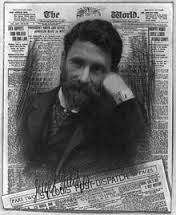
pulitzerJoseph Pulitzer the great journalist said:

Put it before them briefly so they might read it, clearly so they will appreciate it, picturesquely so they will remember it and, above all, accurately so they will be guided by its light.

I think there is a tendency to rattle off lots of emails these days, many of which fail to make their mark. Might a bit of planning, good subject titles, a logical structure and careful use of language get us all better results?

I learned my writing skills at Procter & Gamble – famous for its one page memos at the time. We were taught how to plan and write persuasively and concisely. This is what we learned.

  1. The importance of planning

Before writing we were encouraged to think about:

  • Who we were writing to (not just the initial person, but maybe their boss or others that might be consulted etc)?
  • What did we want the reader to do as a result of reading the memo?
  • What key factors might they consider in making their decision?
  • Gathering all the information we might need to support our case
  • Prioritising our points and arranging them in a logical order
  1. Structure

The title and opening paragraph are very important to get right. Spend as much time on this as the rest of the document combined. The reader needs to know clearly:

  • Why they should read it? (There might be 50 other emails in their inbox)
  • What are you asking for (eg a decision?)
  • What is being recommended?
  • What are the key details?

The second paragraph should contain any necessary background. Keep this short. The reader only needs sufficient information to understand the problem or your recommendation

Next, provide a basis for your recommendation. This is where you explain why you are recommending what you’re recommending

Now you can provide any details, such as:

  • Assumptions, costs, timings etc
  • Alternatives and why these were not selected
  • A short review of risks and how these will be mitigated

Finally, a paragraph on next steps assuming the proposal is accepted.

  1. Tips on Style

In terms of style, this is what P&G recommended.

When selecting words, choose familiar, commonly-understood terms rather than technical jargon. Choose short rather than long words. Be precise rather than vague (ie ‘17 out of 20′ was preferred to ‘many’).

Keep sentences short (ie less than 20 words). Ideally convey only one thought in each sentence.

Use paragraphs and headings to break the memo into readable units.

4. Editing

This is often the most important step in the entire process. Ask yourself, is it:

  • Clear
  • Concise
  • Complete
  • Persuasive
  • Accurate

If not, redraft!

Any thoughts on how this blog might have been improved?

For more on what firms could learn about business strategy from Procter & Gamble read https://tonyreiss.com/2013/02/06/what-law-firms-could-learn-about-strategy-from-procter-gamble/

For more on P&G’s selling process, see https://tonyreiss.com/2012/01/16/procter-gambles-7-selling-steps-a-traditional-approach-to-selling/

Posted in Business Development and Selling, Coaching and Training, Leadership and Management | Tagged , , , , , | Leave a comment

Law Firms Need to Use More ‘Nemawashi’

nemawashiThe Japanese can teach us about decision-making and successfully implementing change. They use an approach called Nemawashi, which roughly translates as ‘smoothing around the roots before planting’.

Toyota has pioneered the use of nemawashi (see http://blog.toyota.co.uk/nemawashi-toyota-production-system).

Basically the nemawashi approach involves:

  • Focusing single-mindedly on client needs
  • Consulting staff to consider all the options

This approach builds consensus and commitment to the initiative. It allows time for people to adjust their opinions. It’s the exact opposite of the approach adopted by most of the candidates on The Apprentice!

Research shows that most change projects in western cultures fail to achieve their objectives. The reasons attributed are because:

  • the change is imposed from on high, resulting in those engaged in implementing the change not being committed to it
  • a lack of clarity as to the vision behind the change
  • people not knowing what first steps to take
  • people not having the skills or knowledge to implement the change
  • leaders not modelling the change in behaviour, so others don’t see the change as important

If firms adopted more nemawashi, I believe change projects would be more successful.

Posted in Leadership and Management, Managing Change, Strategy | Tagged , , , , , , , | 2 Comments

How to Deal With Resistance to Change Within Law Firms

resistanceMost resistance to change gets communicated subtly. We need to pick up the clues. The resistance is often not in the words they are using but more in the manner through which they are communicating.

How naive I was when I first attended a Board meeting to persuade the members to adopt a strategy on new ways to address client relationships. I got a 100% ‘yes’ to my proposal but there was little enthusiasm and the Board just weren’t expressing their concerns.

Here’s a list of some of the most common different forms that resistance can take and ways of addressing it. We need to be tactful and not feel attacked by the resistance, hence the neutral, non-judging language to draw the other person out. Also the more credibility, rapport and trust you have invested in the relationship, the easier this conversation will be.

Resistance takes this form Addressing the resistance
Person avoids responsibility for the problem or solution ‘’It seems that you don’t see yourself as part of solution. What role do you think you could play….’
Flooding you with detail ‘I’m getting more detail than I need at this stage. How would you describe it in a short sentence?’
One word answers ‘You’re giving me short answers. Could you say more?’
Changing the subject ‘The subject keeps shifting. Could we stay focused on the issue of X?’
Compliance ’You seem willing to do anything I suggest. I can’t tell what your real feelings are on this’
Silence ‘You’re very quiet. I don’t know how to read your silence’
Pressing for premature solutions ‘It’s too early for solutions. I’m still trying to find out X’
Attack ‘You’re really questioning a lot of what I do. You seem annoyed about something?’

After you make your comment, try staying silent to draw the other person to reveal what’s really going on for them.

Remember that if you’re not getting at least nine out of ten enthusiasm to your idea there’s likely to be some tacit resistance. It’s better to flush this out at the outset.

This technique has been adapted from Peter Block’s Flawless Consulting.

Posted in Leadership and Management, Managing Change | Tagged , , , | Leave a comment

A Bible for Mentors and Trainees in Law Firms

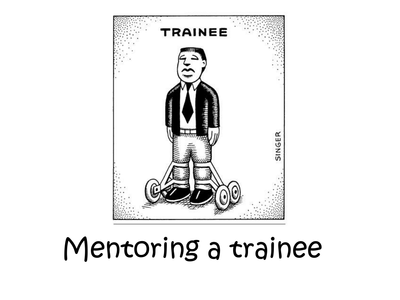
mentoringLaw firms have a great tradition of learning from the master – sitting with Nellie, as it is sometimes called in the UK.

It’s a great way of learning. But only if ‘Nellie’ has good practices and is a good mentor.

Here are some useful guidelines for mentor – trainee relationships:

If trainees work with criticism, they learn to condemn.
If trainees work with hostility, they learn to fight.
If trainees work with fear, they learn to be apprehensive.
If trainees work with pity, they learn to feel sorry for themselves.
If trainees work with ridicule, they learn to feel shy.
If trainees work with jealousy, they learn to feel envy.
If trainees work with shame, they learn to feel guilty.
If trainees work with encouragement, they learn confidence.
If trainees work with tolerance, they learn patience.
If trainees work with praise, they learn appreciation.
If trainees work with acceptance, they learn to love.
If trainees work with approval, they learn to like themselves.
If trainees work with recognition, they learn it is good to have a goal.
If trainees work with sharing, they learn generosity.
If trainees work with honesty, they learn truthfulness.
If trainees work with fairness, they learn justice.
If trainees work with kindness, they learn respect.
If trainees work with security, they learn to have faith in themselves and in those about them.
If trainees work with friendliness, they learn the firm is a nice place in which to work…and they might not leave to join your rival!

Sherwood PSF Consulting provides programmes to develop mentoring skills.

Adapted from ‘Children Learn What They Live’ by Dorothy Law Nolte

Posted in Coaching and Training, Leadership and Management | Tagged , , , | Leave a comment

Leadership in Law Firms is Too Important to be Left to Partners

Credit: Boston.com

Credit: Boston.com

Law firms have a wealth of untapped talent at the senior associate (SA) level in my view. If partners could let go a bit more, so much more could get done and margins would be improved.

I’m not talking about running-the-firm type leadership, but leadership at an operational level, such as:

  • running matters effectively,
  • helping to motivate team members working on matters,
  • assessing risks to the firm and mitigating such risks
  • contributing more to business development etc.

So here’s a 3 stage process for helping SA’s transition to being more effective leaders:

Stage 1 – Establish the Requirements and Set Leadership Goals – Management needs to agree and support such an initiative. Not easy in itself because not all partners will feel comfortable letting go.

Then each SA needs to have goals that should be stretching and geared to each individual’s capability and interests. We advocate using a 180 or 360 diagnostic to help the lawyers get insights into their current leadership style. It’s important to know what the junior associates really think of them. And it’s important to make this confidential and not attributed.

Stage 2 – Run a Development Programme – The programme would be designed to clarify what the firm expects of their SA’s and would aim to equip SA’s with the skills required. Details of our suggested content for such a programme are below.

Stage 3 – Ongoing Action Learning Sets – Training programmes on their own are limited in terms of what shifts can be achieved.

Ongoing programmes will remind SA’s of what needs to be worked on and provide support. Internal and external coaches can provide the support and crack the whip as required! Sponsoring partners can play an important role as well.

Proposed Content for SA Development Programme

From our experience at working on leadership programmes, below is an example of what we’d recommend to move your senior associates up the leadership ladder.

  1. ON BEING A TRULY COMMERCIAL LAWYER – Exploration of the commercial lawyer’s skillset – defining what being a commercial lawyer means for clients & for the firm
  2. HOW TO RUN A PROFITABLE MATTER – Explaining the levers of profitability, do’s and don’ts & tools for running a profitable deal. Providing guidelines on scope creep and pricing.
  3. BEING AN EFFECTIVE MATTER MANAGER – Understanding the requirements of the client, the firm and team members and exploring why it’s hard not to drop a ball when you get too sucked into the detail.
  4. DEVELOPING BD & CLIENT SKILLS – Framework for understanding what we have to do to develop contacts & client relationships and support partners on profile relationships and profile-raising. Clients increasingly want to build a relationship with the SA’s
  5. UNDERSTANDING YOUR LEADERSHIP STYLE – Using a diagnostic tool to deepen the participants’ understanding of their personal style, the different styles of others and how participants might benefit from adopting different management approaches sometimes.
  6. DEVELOPING YOUR PEOPLE – On being a leader that others want to follow. The art of delegation, supervision & coaching. The skills of giving feedback and delivering difficult messages

 Give us a call if you’d like to hear more about how we can support your associates make a transition to being more effective leaders.

Posted in Coaching and Training, Leadership and Management | Tagged , , , , , | Leave a comment

How Effective are Your Conference Calls?

Leconference callst’s face it, conference calls can be a nightmare! All those calls to the far side of the globe, sometimes at socially inconvenient times of the day or night, perhaps not knowing:

  • why you’ve been invited to take part,
  • who else is on the call,
  • who’s speaking half the time,
  • or even being clear at the end what’s been agreed.

Some people comfortably at their desks, others on their mobile in a taxi with a dodgy signal.

For some reason we tend to adopt a more informal style of the phone (all those calls to parents and friends?). My thesis is that we need to adopt more rigorous processes to get conference calls to work effectively.

The same principles concerning how to be effective in meetings apply to having effective conference calls. There are however more opportunities for telephone meetings to go awry. This is caused by the obvious problem of not being able to see the other people in the discussion and thereby not being able to judge their reactions to what is being said.

Here are some tips…

Appoint a Chair and agree clear processes

Most people adopt a more casual approach to telephone conversations. To compensate for this, it can be more important for someone to act as Chair and suggest an agenda and propose a process for discussing the issues. For more tips on the role of an effective Chair, see https://tonyreiss.com/2013/10/24/the-role-of-the-chair-of-the-meeting/

Who is there?

Your first challenge is to ascertain who is listening or taking part in the call.

Who is speaking?

With several people on the call, it can be difficult to know who is speaking. A useful tip is to ask each person to say his or her name before saying something. “Tony here…I was thinking that…”

Being clear about decisions and levels of commitment to the outcomes

In a face-to-face meeting, it is relatively easy to judge when agreement has been reached and when everyone is happy with the agreement. In telephone calls this is harder to judge. One way of ensuring everyone is on side is to ask others what their understanding is as to what has been agreed and try to find out their level of commitment to what is happening next.

Listen for silences

Another clue that demonstrates that someone might not be fully on board is when he or she has gone quiet. Look out for this and, to check if everything is all right, say “Hans, I’m sensing you may have reservations…are you happy with the direction we’re taking?”

Look out for lack of agreements

Look out for situations when the other side might not be in complete agreement. In such circumstances, it may be appropriate to offer them the equivalent of a 10-minute recess to discuss the matter before continuing with the conference call.

By adding more rigour along these lines, I’m sure you’ll find your conference calls more effective.

Posted in Leadership and Management, Networking | Tagged , , , , | Leave a comment