For Successful Selling, Which is More Important – Credibility or Rapport?

The age old sales tip goes – in the first five minutes tell them something they don’t know and ask them a question that gets them to think. There’s something in that. After all you want the prospect to be thinking:

  • Here’s someone who knows his stuff, and
  • Here’s someone who wants to understand me and my business better

Credibility is more about ‘what you know’ and rapport is more about the ‘how you’re connecting’. You’re unlikely to get the work with just credibility – lots of others probably know what you know. But without credibility you’re not at the table.

Rapport becomes the key differentiator. A client will choose someone who they think is on their wavelength. Someone who they think understands and shares their values and beliefs – someone who cares.

How do you get credibility? Research and planning help a lot. Try to go to BD meetings with five key things to talk about and ask insightful questions. Three things might be about their market. You might have something to talk about relevant just for the organisation. You might have something just for them (reporting, budgeting etc). This planning and research gives you both knowledge and confidence. Credibility is more about body language than you might think. It helps to have a quieter more authoritative voice. It helps to be comfortable with pauses.

How do you build rapport? It helps if you transmit on their frequency. Be at their energy level. Use their language patterns. If they use short, sharp sentences and talk about taking decisions, do the same. Smile. Be empathetic. Listen with your eyes as well as your ears. Be open – this will encourage them to share more with you.

So which is more important? It was obviously a trick question – they’re both important!

Posted in Business Development and Selling, Coaching and Training, Networking | Tagged , , , | Leave a comment

Beware Networking with Foxes and Donkeys Around

Beware the foxes when out networking!

Beware the foxes when out networking!

It’s taken me a while to realise this (one of my blind spots, no doubt) but my networking strategies have been naïve on occasions. As I’ve got older and (supposedly wiser) I now know that my fundamental belief that ‘networking is about giving’ doesn’t work when mixing with certain types of people – those with the characteristics of the fox and the donkey! Allow me to explain.

There is a four animal model, developed back in the 1980s by Simon Baddeley and Kim James to primarily explain the different political approaches adopted by managers inside organisations. But this model also provides a vivid means of differentiating between the values that underpin the different types behaviour of fellow networkers.

These types are different in two interesting dimensions: their extent of political savvy and their extent of commitment to the greater good rather than self interest. I’ll briefing go through the four types.

Sheep (low political savvy- low self interest)

An implied innocence underlies the sheep approach. Other words that spring to mind might be loyal, naïve and easily led. They are the types who say (providing they recognise what is happening in the first place), ‘I have no time for politics’ or, ‘I don’t want to play any games.’ They believe that processes and procedures should always be followed and that only the proper and formal channels exist. They cling to the notion that the best idea or person will always win through fairly. They always respect levels of authority. Many of us start our working life with this viewpoint and some will even maintain it for an entire career.

In summary these types are of limited value to networkers (‘Baa’ I hear you bleat!). They’re probably only attending because they’ve been asked to. They offer little risk.

Donkey (low political savvy – high personal interest)

Words such as stubborn, unprincipled and inept might sum up the donkey character, but it goes deeper than this. We have all encountered the colleague who thinks he’s on the inside track, is fond of mentioning connections to senior people and is convinced he plays a smart game. Sadly, this is often an illusion, and as a result donkeys can get used or taken advantage of by other, more ruthless, individuals. They also deny themselves the support and collaboration of team members when it comes to doing the job they are really paid for. This is a bitter pill to swallow for those who pride themselves on thinking they have worked out how to get ahead of others in pursuit of their personal goals.

In networking terms, these types are of limited value to networkers – though potentially quite entertaining! (‘Ee-aw’ I hear you say!). They offer potential risks though because they are ‘on the take’.

Owl (high political savvy – low self-interest)

Wise, highly observant and with excellent interpersonal skills, the owls are well placed to succeed. Success for them means positive outcomes for both themselves and the organisation that employs them. They use their highly developed networking and communication skills to generate support and build alliances. The Owl is loyal, acts with integrity and has the capacity for friendship, shares information and is open and co-operative. They can take the difficult decisions, but work hard to ensure that the outcomes are not counter-productive. They are overt and demonstrate this by listening and disclosing appropriately. They are visible and approachable, yet powerful and focused.

These characters are the equivalent of networking nuggets. Try to find reasons to follow up afterwards.

Fox (high political savvy – high self-interest)

The chances are we all know somebody like this. Cunning, sly and clever, foxes know their way around. They are really quite adept at negotiating the corridors of power, getting support and being tuned in to the bigger picture. They are ace networkers – always seeming to be able to sniff out others with power and influence. They recognise and take advantage of the weaknesses of others in order to get ahead and further their cause. Unfortunately, it is ‘their cause’ that they invariably put first in their decisions and strategies. The objectives of others tend to be neglected, even ignored when it suits.

In recent years, several major corporate failures may even have been precipitated by extreme fox like behaviour among senior managers.

These characters are high value and high risk to networkers. They’ll accept your offers for information and connections and potentially fleece you (sorry sheep!). If you’re naturally a networking giver, look for signals that there are early signs of reciprocation before being taken advantage of.

So, when out networking, my advice is to continue to see networking as about giving – giving time, attention, interest, sharing your network etc. But be alert to the fact that these offers may be being wasted on some creatures who’ll be offering little back.

Cynical? Maybe. But also pragmatic and realistic.

For tips on having a good elevator pitch, see https://tonyreiss.com/2013/04/10/elevator-pitching-the-wow-how-now-approach/

Posted in Business Development and Selling, Networking | Tagged , | 1 Comment

How to Ask Powerful Questions

Martin Vogt Photographer

Powerful questions don’t require us to shout! Photo credit: martin vogt

What strikes me about working with the professions is how smart everybody is. Lawyers, tax specialists, patent attorneys and others know an impressive amount of technical stuff. Where many of them are weaker is in their ability to phrase good questions and then really listen to what is being said to truly understand.

I wonder whether this stems from our education. It strikes me that schools encourage us to learn lots of answers, but they don’t focus so much on the art of asking incisive questions.

So what do we mean by powerful questions? Eric Vogt, a strategy and leadership consultant, has looked into this topic. He asks us to consider the following questions:

What time is it?

How do you make strawberry ice cream?

What does it mean to be human at this point in history?

 Clearly these three questions differ in terms of their impact and power. Vogt’s work offered these thoughts about powerful questions:

A powerful question…

• stimulates reflective thinking

• challenges assumptions

• is thought-provoking

• generates energy and an area to explore

• channels enquiry, promises insight

• is broad and enduring

• touches a deeper meaning

• evokes more questions

Vogt also considered how to phrase powerful questions.

The Linguistic Architecture of Questions

One dimension of power clearly comes from the linguistic architecture. We know, for instance, that sales people observed decades ago that open questions were much more powerful for stimulating a sales dialogue than closed questions.

“Do you have any problems with your external counsel?” tends to yield fewer selling opportunities than “What problems have you ever experienced with external counsel?”

There are of course exceptions to every rule – closed questions such as “Can I start drafting the agreement?” work better at the close of a sales meeting.

This open/closed distinction can be expanded into a richer hierarchy of powerful questions. Vogt asked participants to grade questions and the following hierarchy was established: 

Hierarchy of Powerful Questions

Why…?

How…? What…? 

Which…? Where…?

Who…? When…?

Closed questions (inviting yes/no/one word answers)

The general thesis is that virtually any question can be converted into a more powerful question by moving up the list. As an example, consider the following sequence:

Are you feeling okay?

Where does it hurt?

How are you feeling in general?

Why do you suppose you aren’t feeling well?

 As we move from the simple yes/no question towards the why question, you probably notice that the questions tend to motivate more reflective thinking, and might be considered more powerful.

There are refinements within this dimension of linguistic architecture. For instance, using the conditional tense rather than the present tense will often invite greater reflective speculation:

What can we do?

seems to offer fewer possibilities than…

What could we do?

However, other factors are also at play when we consider the relative power of the following two questions:

Why is my coat unbuttoned?

Where can we find spiritual peace?

This is an instance where most people would say that the “where” question has somewhat greater power than the “why” question.

After reflection, Vogt hypothesized that there were probably two additional dimensions which define a powerful question:

  • Scope
  • Meaning/Context

The Scope Dimension of Questions

The scope dimension suggests that questions which encompass more people, more volume, more time, or more concerns have greater scope, and tend to be more powerful questions. An example might be the following contrast:

How should we manage George?

How should we manage the firm?

In this example, the question increases in scope and the implied “we” increases in scope as the object changes from George to the firm.

The Meaning/Context Dimension of Questions

The meaning/context dimension is a more complex, subtle aspect of questioning.

Vogt believes that an understanding of the nature of the interaction between questions and assumptions is critical to a full appreciation of powerful questions. Understanding the role of assumptions in questioning may be, in particular, a key to gaining greater insight into the meaning/context dimension of powerful questions.

Vogt observed that questions which challenge or alter assumptions have the power to shift context and change mindsets. Compare the two questions: 

How can we compete with the Chinese?

How can we collaborate with the Chinese?

The second question shifts the context and opens up a different exploration and a different set of subsequent questions.

Vogt decided that questions may have one of the following four impacts upon assumptions:

Create /Reinforce /Alter /Destroy

The order of these verbs may reflect the power of the question. For instance, it is much easier to reinforce someone’s prevailing assumption than it is to alter it.

Similarly, it is generally easier to create a new assumption than destroy an existing one. Therefore, as we explore the nature of powerful questions, we might ask, “How does this question interact with the listeners’ assumptions?”

Final Thoughts

Clearly some questions can be too robust given the existing relationship. Good incisive questions may require a good deal of rapport before they will be received well and accepted. Part of the skill involves us judging how powerful to make the question given the existing relationship.

Having said that, my experience working with those in the professions is that the questions are typically not powerful enough!

Though schools don’t focus so much on teaching us questioning skills, might these skills be learnt on-the-job?

How powerful a question is that last one?

Posted in Business Development and Selling, Coaching and Training, Leadership and Management | Tagged , , , | Leave a comment

Strategy & Implementation – do staff members know where they’re going?

The route map that wasn't needed!

The route map that wasn’t needed!

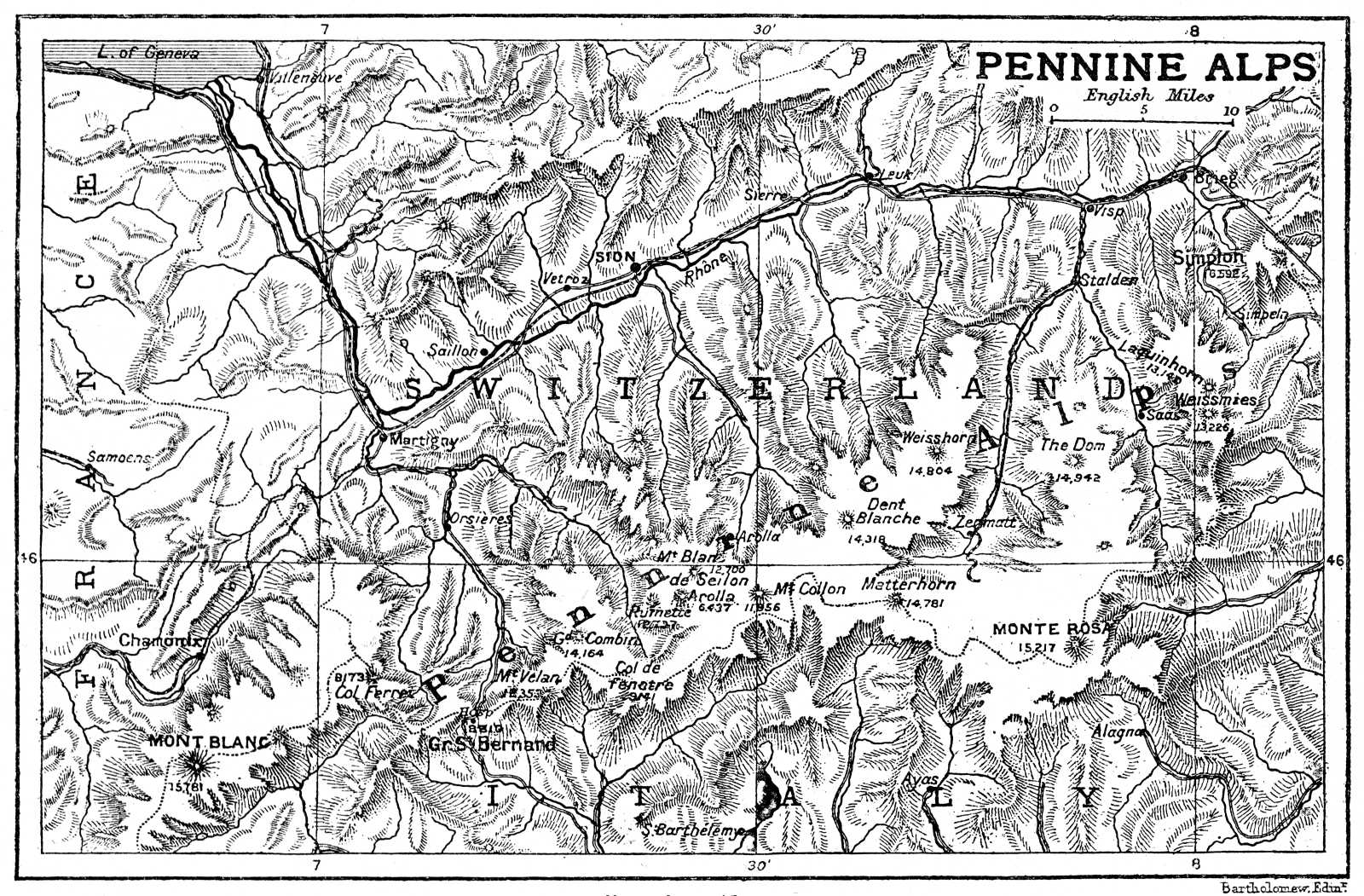
This amazing incident, related by the Hungarian Nobel Laureate Albert Szent-Gyorti and preserved in a poem by Holub (1977), happened during military manoeuvres in Switzerland.

The young lieutenant of a small Hungarian detachment in the Alps sent a reconnaissance unit into the icy wilderness. It began to snow immediately, snowed for two days, and the unit did not return. The lieutenant suffered, fearing that he had dispatched his own people to death.

But on the third day the unit came back. Where had they been? How had they made their way? Yes, they said, we considered ourselves lost and waited for the end. And then one of us found a map in his pocket. That calmed us down. We pitched camp, lasted out the snowstorm, and then with the map we discovered our bearings. And here we are. The lieutenant borrowed this remarkable map and had a good look at it. He discovered to his astonishment that it was not a map of the Alps, but a map of the Pyrenees!

This story clearly demonstrates the power of beliefs on the journey of a team. Regardless of the map, the soldiers regained their faith in finding their way.

Does this demonstrate that ignorance is bliss? No. It only proves that, in times of uncertainty and ambiguity, it’s more important to have a sense of direction than anything 100% accurate.

Do your partners and staff know where the firm is going?

Posted in Leadership and Management, Strategy | Tagged , , , , | Leave a comment

Managing Generation Y – What Works and What Doesn’t!

Managing Young Talent Conference at Clare College Cambridge

Managing Young Talent Conference at Clare College Cambridge

Managing the new generation of talent clearly isn’t easy in law firms. Are law firms getting it right with this new Gen Y and their different values?  Our work in Sherwood PSF Consulting shows vast differences between firms in performance at 2 year pqe levels. What are some firms doing right?

What do the Gen Y  lawyers need, or seek, from their bosses to allow their talents to flourish? This was the question put to a group of talented young people at a conference at Clare College, organised and chaired by Dennis Sherwood, MD of the Silver Bullet Machine Manufacturing Company. 

Dennis writes….

Talent is a characteristic that almost always manifests itself in the young. Creative talent, especially, is closely associated with youth. The Mozarts – those who display truly exceptional talent as children – are just that, truly exceptional. But there is a wealth of evidence that talent flourishes during people’s twenties: Einstein was 26 when his landmark papers of 1905 were published; Jane Austen wrote Pride and Prejudice when she was 21; Picasso painted his ground-breaking Les Demoiselles d’Avignon when he was 26; Orson Welles was 26 when Citizen Kane was released; Igor Stravinsky was 30 when The Rite of Spring caused a riot in Paris; Richard Branson started Virgin Records at age 22; Michael Heseltine was 25 when he founded Cornmarket Publishing, later rebranded as Haymarket.

These days, most people in their mid-twenties are just a few years out of university and professional training, right at the start of their careers. If it is this age group that has the talent, what conditions do they need for that talent to flourish? That’s exactly what a syndicate – which included some very lively young delegates – explored at the Clare Conference…

“It’s a total pain to be managed…I don’t want to be told what to do because I might as well be a robot and there’s no thought in that…and if someone holds my hand too much, I don’t really learn.” 

Hmm… How might you, as a boss, react to hearing that?  And if you are a boss, how do you really know what your young, talented people are thinking? What a great way to begin our discussion…

But why should youth be the central feature of the discussion? Surely older people are talented too? And doesn’t their talent need to be encouraged in the same way? Well, there are some important differences:

  • A younger person might not be so organisationally and politically savvy;
  • Younger people don’t always recognise the value that ‘experience’ can bring and can often be (wrongly) dismissive of its importance;
  • A younger person might be more sensitive to ‘management’ (look no further than the quote above), and so ‘development and training’ might be less evocative of being stifled;
  • Younger talent may want to explore things more, not being channelled by past failures.

So young people are indeed different from older people, and need to be ‘managed’ accordingly.

What a wise manager should do, and should not to do

The group of Gen Y people at the conference agreed on the following:

  •     Don’t use the word ‘manage’.
  •     Make it absolutely clear what you want done, but not how you want it done – define ends, not means.
  •     Help young people to learn from the whole team – from their colleagues and not just the boss.
  •     Remember that young people might be reluctant to speak, especially in the presence of dominating, more experienced, and older people – so help them to get their voice heard.
  •     Help when things go wrong. This is key, for young people feel much more personally and strongly about failure than more experienced people who’ve learnt how to take the knocks. Make sure there is positive learning from ‘failure’, and that young talent doesn’t suffer from a serious lack of confidence as a result.
  •    Create the right environment to encourage exploration: a boss who listens will mean that a young person will listen.
  •    Don’t just let young people ‘get on with it’, without a safety net – it’s far better to give a sense of direction and some boundaries. Yes, it might be flattering to be given a completely free rein, but too much freedom too early might not be for the best.
  •    Get the balance right between allowing a young person to make their own mistakes, and forcing your hard-won wisdom on those who might benefit from learning.

Failure hurts

What happens when young people make a mistake, fail? To a young person, even the smallest error can appear to be a catastrophe, driving a crisis of confidence, which is all the more damaging if they get the blame, rather than their manager. Older people know that they can recover (one would hope so!); and an older, more experienced, person might have the foresight to see trouble coming, and also the confidence to say “I need help here” or “that job’s just not doable to the right quality in that timescale”.

There is a really difficult barrier for a less experienced person to overcome here: younger people are less likely to spot problems in advance, and, when problems do arise, they can be troubled by the anxiety of not knowing if it is OK to ask for help, or by the fear of potentially appearing to be incompetent.

Many younger people feel that when they are being given a task to do, it is, in some form, an ‘intelligence test’, on which they are being judged. What really helps here is to have a relationship of trust and openness, a relationship in which the manager makes it quite clear that it’s OK to ask for help; a relationship in which the manager says “thank you, well done” at the end. So managers should be accessible, sitting near their people, and not behind closed doors.

Other aspects of the relationship are important too. More experienced people are role models for behaviour. Watching good performers is a good way of learning. And although young people don’t want to be treated with kid gloves, there needs to be good, trusting two-way communication, and not just on what is going well. Young people respect behaviour which counsels rather than lectures, is clear not woolly, and doesn’t patronise by ever saying “when I was your age…”.

Communication and feedback

Feedback is one of the most important channels of two-way communication. Here are some more tips:

  • Ask the Gen Y’s what style of supervision, guidance and management they would prefer – that way the young person can be party to setting the ‘rules of engagement’.
  • Make it genuinely safe for the younger person to give feedback upwards, without fearing that there might be negative consequences – an especially difficult situation when the person receiving the feedback is also responsible for the pay rise.
  • Make sure that there is always someone else that the Gen Y can talk to and relate to – for instance can they talk to their line manager if they are not getting on with a person they are working with?
  • Anticipate how a young person might react to feedback, especially negative feedback. Ask what feedback they might give to themselves before launching into something negative, so helping to develop all-important self-awareness.
  • Make feedback a regular part of working life, not just a big deal once a year.
  • Don’t just give feedback in a way that makes a less experienced person become a clone; each person is an individual, and should be allowed to develop in his or her own unique way to make their own unique contribution, rather than being forced to become a rehash of somebody else.

Recognition and reward

Is recognition the same for Gen Y as for older people? Perhaps things appear to be more profound when you are younger; if you’re not getting regular, or indeed any, feedback, you feel uncertain and frustrated, and this usually leads to a situation in which you convince yourself that “I must be performing badly – if I wasn’t, surely they’d say ‘well done’ from time to time…”.

This, of course, depresses motivation and can soon become a self-fulfilling prophecy in which everyone loses. Getting recognition from your boss is great; getting it from the boss’s boss is even better. All of which implies that the boss needs to be a special kind of person who feels pretty secure with him or herself, and unthreatened.

Incentives need to be structured around giving maximum job satisfaction, and providing opportunities for the younger person to develop through interesting work, as well as by taking on increasing levels of responsibility as soon it can be taken. Being in a meritocracy is a key incentive.

Promotion is sometimes the only reward, but this needs to be done in such a way as to recognise technical expertise, and perhaps the desire to continue using that expertise. As an example, it clearly doesn’t make sense to promote your best technical lawyer to management roles, thereby promoting them away from the things that they love doing.

What works…

The group of talented Gen Y’s at the conference agreed on the following:

  •     Lead by example – for example, a young person is more likely to be willing to do the photocopying, or to get the coffee, if they see that the boss does this from time to time as well.
  •    Channel experience, don’t just direct or tell.
  •    Create an atmosphere of openness and honesty, of trust and mutual respect.
  •    Expose the young person to an appropriate level of risk, whilst providing a safety net, and gradually increase this exposure as the young person develops.
  •    Ask the question “why are we not getting the best from this individual?” even when things are working, because they might be even better…
  •    Ensure young people know what is expected of them,..that the task is not an ‘intelligence test’…and that they are ‘allowed’ to ask for help.
  •     Encourage learning from mistakes where possible: “how might that have been done differently?”

…and what doesn’t

  •     Lecturing!
  •    “When I was your age…”.
  •    Being jealous of junior staff who are more talented than you are.
  •    Cloning – don’t try and mould, or over protect, or force me to be a replica of you.
  •    Don’t be parental, otherwise the young person will behave like a child…
  •    Don’t confuse age with experience.
  •    Avoid a blame culture…

…but if blame is appropriate, make absolutely sure the blame falls in the right place: manipulative managers can be very clever in making scapegoats out of their junior staff.

Clearly, there are many aspects of good management practice that apply equally to older and younger members of the team. But it appears that it’s particularly important when working with younger talent to create an environment that truly encourages learning and doesn’t stifle motivation.

Tony Reiss Dennis Sherwood
tony.reiss@sherwoodpsfconsulting.com dennis@silverbulletmachine.com
Posted in Business Development and Selling, Leadership and Management | Tagged , , , , , , , | Leave a comment

Innovation Through Networking – What Law Firms Could Learn from P&G

Inside the head of an innovative lawyer!Source: Google images

Inside the head of an innovative lawyer!
Source: Google images

It’s got to be true that if what you offer is pretty much the same as your rivals, the way to differentiate your firm’s offering is in how you deliver your service.

Eversheds is one of the firms leading the way. They’ve even appointed a Head of Innovation who said when his firm won the FT Innovation Award: ‘We’re in the process of challenging the way we do things and break down the core legal processes. We’ll put a fixed fee on them where possible’. They’ve also set up Eversheds Consulting to advise clients on wider business problems.

But not all firms have grasped the innovation challenge. There’s no better time than now for firms to look at this issue. The firms that can build a culture of innovating will do better than the others.

My regular readers will know that I often look for relevant case studies outside the legal sector. This will be the second time I’m going to write about the consumer goods company Procter & Gamble (P&G), where I learned about business strategy. P&G has become famous for its recent revolutionary approach to innovation. The story has been covered in the Harvard Business Review as well as in Legal Week.

And here’s what AG Lafley, Procter’s CEO, had to say about innovation in today’s economy:

“We discovered that important innovation was increasingly being done at small and midsize entrepreneurial companies [including] access to talent markets throughout the world. And a few forward-looking companies like IBM and Eli Lilly were beginning to experiment with the new concept of open innovation, leveraging one another’s (even competitors’) innovation assets – products, intellectual property, and people”.

Most of P&G’s best innovations had come from connecting ideas across internal businesses. And after studying the performance of a small number of products they had acquired, they knew that external connections could produce highly profitable innovations, too. Betting that these connections were the key to future growth, Lafley made it their goal to acquire 50% of their innovations outside the company.

The strategy wasn’t to replace the capabilities of their 7,500 researchers and support staff, but to better leverage them. Half of their new products, Lafley said, would come from their own labs, and half would come through them. 

It was, and still is, a radical idea. As they studied outside sources of innovation, they estimated that for every P&G researcher there were 200 scientists or engineers elsewhere in the world who were just as good – a total of perhaps 1.5 million people whose talents they could potentially use.

But tapping into the creative thinking of inventors and others on the outside would require massive operational changes. They needed to move the company’s attitude from resistance to innovations “not invented here” to enthusiasm for those “proudly found elsewhere.” And they needed to change how they defined, and perceived, their R&D organization – from 7,500 people inside to 7,500 plus 1.5 million outside, with a permeable boundary between them.

The new model worked: From 2000 to 2006, the proportion of new products on the market that included one or more elements originating outside P&G went from 15% to 35%, an increase of 133%, and the number of P&G brands generating a billion dollars or more in annual revenue was up to 22.

Essentially, what Lafley led P&G to do was to introduce completely new ways of doing old things or slightly different ways of doing old things that consumers perceive as better, hence more valuable. Have a look at the number of varieties of Head & Shoulders are on the shelves now compared to a dozen years ago.

C’mon law firms – let’s follow Eversheds’ lead and get innovating. How about starting by finding more efficient and cost-effective ways of delivering your services!

Posted in Business Development and Selling, Leadership and Management, Managing Change, Networking, Strategy | Tagged , , , , , | Leave a comment

What Law Firms Could Learn About Strategy from Procter & Gamble

The ads have changed, but the strategy hasn't!Source Google images

The ads have changed, but the strategy hasn’t!
Source Google images

AG Lafley, the recently-retired CEO of Procter & Gamble, and his consulting mentor Roger Martin have just published Playing to Win: How Strategy Really Works (HBR Press). There are important lessons for law firms.

We should listen to Lafley. He ran the biggest consumer goods company in the world with brands such as Ariel, Pampers, Olay, Gillette and doubled its size in 10 years. He also managed to increase its margins and revolutionise its approach to R&D. No easy task. He must know about strategy!

In the book he writes about six common strategy errors:

  1. The Do-It-All Strategy – not making any real choices and trying to be all things to all people
  2. The Don Quixote Strategy – attacking your strongest competitor first
  3. The Waterloo Strategy – pursuing battles on all fronts
  4. The Something-For-Everyone Strategy – trying to capture every sort of client at once
  5. The Programme-Of-The-Month Strategy – going for whatever strategy is in vogue at the time
  6. The Dreams-That-Never-Come-True Strategy – having an ambitious mission statement that never materialises into clear choices

Lafley particularly focusses on what firms need to do to increase the chances of all executives (for law firms read ‘partners’) making the right decisions. He believes there are five components of a good strategy

Five Components of a Good Strategy

1. Being really clear how to define winning. Sometimes it was winning share of business from one type of buyer, sometimes from many types.

Relevance to law firms: For many law firms, winning might be described as developing a greater reputation in the marketplace and moving up the tiers in a publication such as Legal 500. Another measure of success might be enhanced profitability.

2. Being clear what markets you are competing in. For P&G that was sometimes global dominance and sometimes local dominance.

Relevance to law firms: Compared to Procter’s, for firms with international practices, there probably hasn’t been enough emphasis on winning international, cross-jurisdictional work. Also more emphasis should probably be given to ensuring that the firm is outstanding in delivering a seamless service across offices.

3. Having a distinctive strategy to enable you to win. The first two components described above are focussed on the ‘what’ they are trying to achieve. This component is focussed on ‘how’ they were going to do it. P&G put a good deal of emphasis on implementation.

Relevance to law firms: Most practice group plans are too high level. Too little thought is given to how the strategy is going to be enacted. Then there is typically too little follow up from management, so partners don’t take the planning process seriously. This is also true of personal partner plans, which are often little more than a wish list with little alignment to the practice group plan.

4. Identifying the unique strengths the company has and playing to them. P&G takes great care to know their rivals and take appropriate actions.

Relevance to law firms: How can you ensure you have a distinctive offering if you don’t know what your rivals are offering? Also find out what your clients like and don’t like about your service. If you don’t know, just ask. They’ll be flattered to be asked and be impressed with you for asking.

5. Identifying the things that need to be managed for the strategy to succeed. What dials did they need on their dashboard? How often would they be looked at? What actions would be taken to improve performance and by whom?

Relevance to law firms: Those charged with the task of managing practice groups – not an easy role – spend too much time doing administration. Many others in the firms are better placed to do this work and are probably better at it! Instead I recommend asking each partner what support and challenge they would like to ensure they deliver on their plans. Just by checking in each month and asking how it’s going, the leader can highlight whether corrective actions need to be taken.

Overall Lessons for Law Firms

Many lawyers reading this will be struck by the words frequently used in the book such as ‘win’, dominance’ etc. P&G is totally committed to producing the best performing products, marketing/advertising them well and outselling rival products. Would law firms do better to have this kind of dedication to improving performance?

I started my career at P&G. I can still remember the effort we all put in to improving efficiency. I got a pat on the back once from the General Manager for shaving 0.01p off the cost of the packaging! I don’t see the equivalent attention to efficiency in most firms.

Is it easier to be more strategically focussed as a corporate rather than a partnership? Probably, but firms such as Clifford Chance and DLA Piper have also demonstrated a stronger commitment to growth than many other firms and this may have helped them deliver their relative successes.

Maybe firms need a bit more of a winning attitude? But is this too commercial and not really professional?

Posted in Leadership and Management, Managing Change, Strategy | Tagged , , , | Leave a comment

Strategy for Law Firms – Nine Tips for Management

Strategy is About Winningsource: Google images

Strategy is About Winning
source: Google images

Let’s face it, putting an effective strategy into place isn’t easy! Just mentioning the word ‘strategy’ can bring grown partners out into cold sweats!

When we ask, most firms tell us that they’ve got a strategy. But we sense that something is invariably not working smoothly.  From our perspective, we see the Managing Partner or Board having a relatively clear sense of where they are trying to sail the ship, but we also notice the following:

  • This strategy is rarely described in the same way by partners or senior support staff
  • Even if there is a clear agreement as to what the strategy is, a substantial proportion of partners is not committed to it –they might even disagree with important elements of it
  • There isn’t much happening to implement the strategy and what is happening progresses painfully slowly causing management or staff to get frustrated.

Does any of this sound like your firm? If it does, you will be reassured to know that assistance is to hand. Sherwood is undergoing a study into current best practice in strategy development. Our starting point, based on our own experience, is that nine key factors are at play, as described below. We use the terms strategy, vision, plan loosely to reflect the language typically used in firms.

1.     Is there a vision, goal or 3-5 year plan for your firm?

Many consider this to be the starting point. There doesn’t need to be a big heavy document. But something needs to exist in people’s heads so that they can make decisions which help the firm move towards its goal.

The more clearly the firm’s vision is defined, the more likely it will be that practice groups will have strategies which are aligned to the firm’s strategy. The same argument applies to partners having aligned individual plans.

One managing partner puts particular emphasis on defining and clarifying the firm’s culture and values, saying: “I think it’s more important that we work together with a willingness to live to a set of values and the discipline to see this through.”

  • 2.     To what extent is this overall vision known to all partners and key staff?

Firms tend to underestimate how difficult it is to communicate the vision. It is rare for us to get the same answers from partners in a firm, suggesting there is room for improving the clarity of the message.

One firm developed a strategy based on the number 5. Apparently this strategy is still referred to by staff because it was so memorable. It went something like this:

 In 5 years, we’ll be on 5 floors generating £50 million in fees with 500 people and one of the top 50 firms.

A board member of one firm thinks it’s important to express the strategy in terms of stories: “A problem with strategy is that it sounds so dull. We try to use stories and say to clients that we’re going to stay with them through changes in their lives”.

Another tip is to make the goals attractive. More people would like to think that their ship is sailing to the sandy beaches of Rio rather than a sweat shop!

  • 3.     How often is the vision referred to?

Leaders tend to think that, after they’ve told people something once, it’s clearly in everybody’s heads. Unfortunately, it doesn’t work that way! People need reminding repeatedly. In part this is because there are so many other things being said by management (eg ‘get those timesheets out!’, ‘chase those debtors!’ etc) that the vision stuff gets drowned out. Also, people won’t see it as important unless it gets repeated. This is a good example of actions speaking louder than words.

A CEO of a regional firm puts it like this. “As a result of talking to Sherwood about strategy, I’ve now realised that communication with staff is so important that I’ve introduced quarterly staff meetings so we can demonstrate the importance of the strategic message”.

Other tips are to have strategy elements referred to on the intranet startup page or on internal management memos. Also what about telling your clients?

  • 4.     To what extent are partners and staff committed to the vision?

This is key. If you have to chase people all the time, because the partners don’t have their heart into it, the strategy is looking unsustainable. Whatever the strategy involves, whether it’s developing new practice areas, or opening new offices, it’s going to take a lot of energy. It helps hugely if people can find their own enthusiasm.

Partners tend to be more committed to a vision when they can see that the goals clearly affect them. The more the strategy can be defined in terms of clients, sectors and types of work that affect the partners, the more commitment you are likely to get.

5.     How widely were partners and key staff consulted in creating the vision?

In our experience, this is the biggest single contributor to building commitment. If the strategy descends from on high as a pile of wizzy PowerPoint slides, it might win people’s heads over but it is unlikely to win their hearts. Asking partners and staff questions about where their passion lies and what concerns they have about the future is a good starting point. Management then need to show they’ve listened and build in what people say into the plans.

But what happens if certain partners don’t get the overall strategy they want? Well, the final strategy needs selling big time! What can win partners over is if they can see a rosy future for themselves by implementing the strategy. What status will they have? What role? What career prospects? What remuneration? If they can see an attractive outcome for themselves, partners are more likely to commit to the strategy.

6.     To what extent is management actively motivating partners and staff?

Enacting the strategy is tough. Management should be going around the firm asking people how they’re getting on and showing that they care. Not so much formal meetings. More walking the corridors and catching people at the coffee machines.

Everybody is different. What motivates one person might not motivate another. But most people will respond well to some pats on the back and a few ‘well done’s’.

  • 7.     At what speed is the vision being implemented?

Most law firm leaders we know are often frustrated at the speed of progress.  A CEO said: “Of course progress is slow – we’re a law firm!” The truth is that it does take time to do big strategic things. Sometimes the targets set are over ambitious. This can be demoralising. We believe it’s better to make progress which is slow but sure.

It can help to have frequent and achievable milestones. One firm has tried having quarterly bonuses based on results over successive 3 month period.

Another view is that it is better to have the herd thundering even if it’s going in slightly the wrong direction.

  • 8.     To what extent is lack of progress tolerated?

Many law firm leaders find this one of the most challenging aspects of their job – tackling underperformance. It tends to be left with leaders crossing their fingers that the issue will somehow go away. It rarely does. Our advice here is to be really clear up front about what is expected and to have lots of formal and informal review meetings to pick up early if progress is slow.

Any person who initially struggles to achieve the new objectives should be offered support.

  • 9.     To what extent is management leading by example?

People respond more to what you do, rather than what you say. If you’re not doing your bit to implement the strategy, why should anybody else?!

It can be useful for management to agree how they are going to demonstrate their leadership in implementing the new strategy.

One CEO said: “I’ve also got a meeting booked in with my senior partner. I’m going to use your checklist as an agenda and we’re both going to assess how we’re doing on strategy. I think that’s going to be really useful. We might agree an alternative approach to make better progress.”

Final Thoughts 

If you’re looking for some fundamental structure to your approach to strategy, there are three key concepts in successful strategy formulation and implementation.

ENGAGEMENT – Consult widely, involve partners and staff and build commitment 

VISION – Create an attractive vision of the future and keep reminding people where you’re all sailing to 

EXECUTION – Be magnanimous with your praise yet merciless in making it happen

Posted in Leadership and Management, Managing Change, Strategy | Tagged , , , , , | Leave a comment

The Cobbetts Aftermath – Why Law Firms Need Better Strategies

Lumbarda2

A bad strategy written on stone?

The downfall of Cobbetts is sending a shock wave through the legal market. Are firms tackling the economic downfall with appropriate strategies?

I can always tell if a firm hasn’t got a working strategy. All I have to do is ask a partner what the strategy is. What I typically then hear is a list of activities – and that isn’t a strategy. Of course the firm might have one, but it’s not much use if the partners can’t articulate it!

Most law firms are finding the market tough. Those of us working on the consulting side (the dark side?) talk about there having been a paradigm shift in the legal market. The power has dramatically shifted to the client side. So we would expect firms to reflect on their future and undergo some kind of strategic review, asking important questions, such as:

  • What markets should we focus on?
  • Which clients should be given particular care and attention?
  • How are we going to stand out from the crowd and ensure we deliver best value?
  • How should we address under-performance?

Most firms have only partially addressed these questions. Also there appear to remain some misunderstandings about how to develop and implement a strategy.

Here are some important things to bear in mind about strategy.

  1. Let’s start by reminding ourselves why strategies are important. Strategies are needed because firms benefit from enacting a series of coherent actions. If Rome can’t be built in a day, a profitable new practice can’t be built overnight either! Too many one-off initiatives don’t work. They don’t create a sustainable change.
  2. Strategies should be based on market intelligence. You should base a strategy on facts not whims, flights of fancy, a list of ideas generated late at night at a retreat or personal egos.
  3. Strategies act as a decision-making guide for partners. They help tell partners what to do and what not to do. They help partners determine what’s important and what the priorities are. They also relieve partners of a good deal of stress. Instead of partners having undue anxiety about what other partners think about their actions or performance, a strategy gives partners clarity and permission to take action.
  4. Developing a strategy is fundamentally a relatively simple process; it involves analysing the market (what’s growing, profitable etc) and reviewing where you stand in terms of what you’re good at, who you know etc. It’s a matching process, comparing external trends with internal capabilities. It’s not a wish list!
  5. Don’t make the mistake of thinking that low fee rate work is unprofitable. Many firms make more profit on low charge out work, through developing efficient processes and appropriate leverage, than on the so-called sexy deals with higher charge out rates, but lower utilisations. The relevant questions are what kind of work is needed and what are you good at?
  6. Where strategies can add a lot of value is through aligning the strategy for the firm as a whole with the strategies of each of the practice groups with the personal business plans of each of the partners. This helps avoid partners ploughing their own furrows in separate fields and increases the chances of synergy being created.
  7. It’s much harder getting partners to enact the strategy than to put one together! And this is, in the end, what determines whether your firm generates a sustained competitive advantage.
  8. Getting buy-in to the strategy is absolutely key. And don’t make the mistake of thinking that a partner nodding in agreement really is agreeing. They might just be nodding ‘yes – I hear you!’ You’ll need at least 9/10 on the commitment and enthusiasm scales for a strategy to be enacted successfully.
  9. Strategy should be an ongoing process. Don’t get your slabs of marble out and chisel! In an uncertain world, a strategy needs to be a living, breathing thing and adaptable. Smaller firms can have huge advantages over bigger firms because they can be nimbler.
  10. Management needs to be fair, but merciless in driving your partners to deliver. Under-performance should not be tolerated. It can be hard not focusing on immediate, operational day-to-day issues. But I advocate less time being spent by management choosing Xmas cards and more time on the bigger issues, such as:
  • New project management processes to deliver work more efficiently
  • A pricing survey
  • Competitor analysis
  • Client satisfaction reviews
  • Etc

How about the board fixing agendas every three months or so to look just at these important issues?

I hope firms find this review helpful. If you’re interested we can provide several case studies on how Sherwood has worked with firms making progress on important strategic issues.

Posted in Business Development and Selling, Leadership and Management, Managing Change | Tagged , , , | Leave a comment