
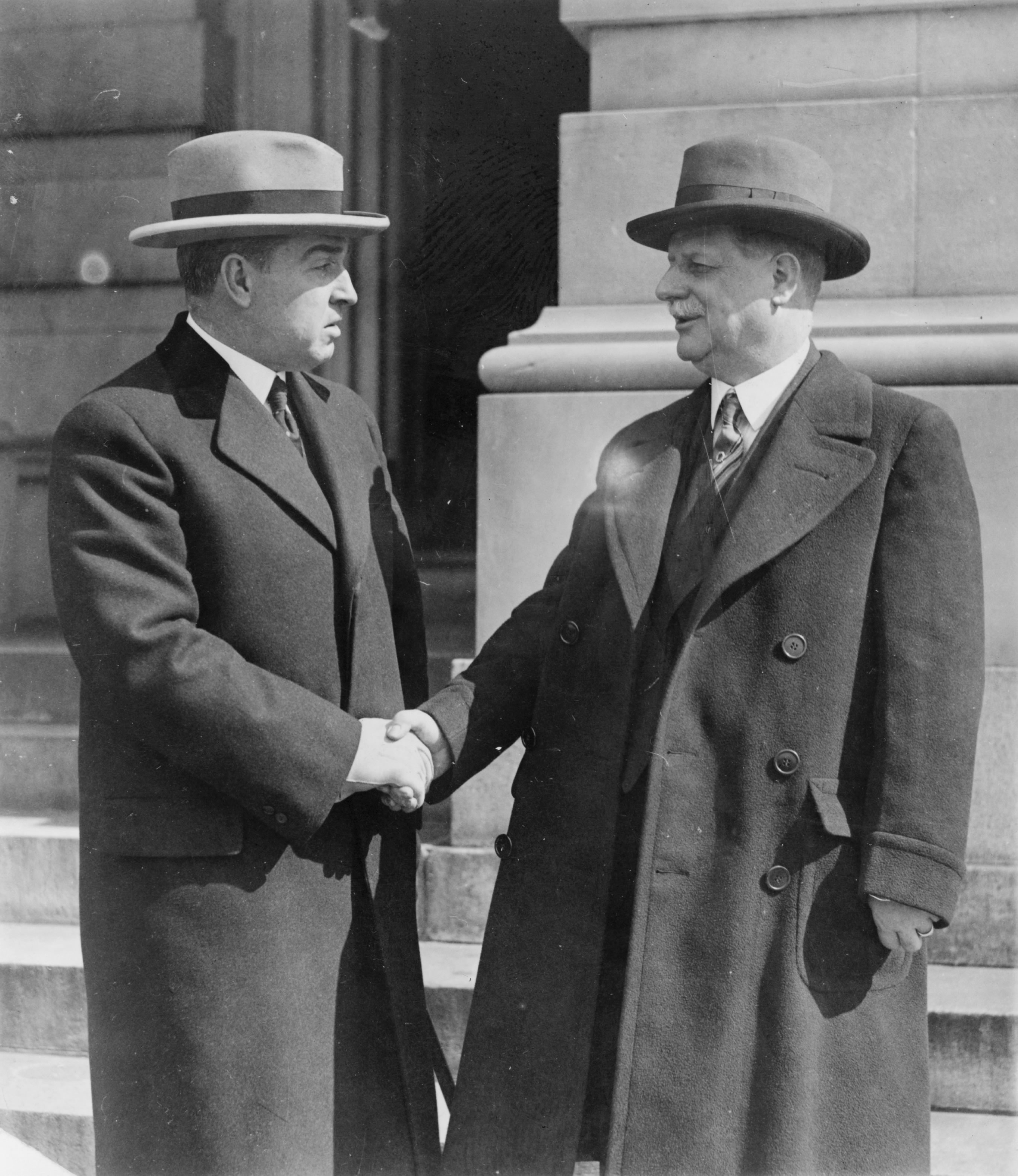
“We Will Let You Know” – the Dreaded Words After a Pitch

Shaking hands doesn't mean you've got the business! Source: Google images

Shaking hands doesn’t mean you’ve got the business!
Source: Google images

We’ve probably all heard these words after a client presentation:

“Thank you very much. That was very interesting. We’ll give your presentation due consideration and let you know.”

We typically go away and wait….and wait. Each day thinking we haven’t got the work. Each day wondering what we should do. Should we phone or email? What should we say? Our heart gradually sinks. We imagine all that good work going down the drain and the client gradually forgetting all those powerful selling messages that we put across.

But we shouldn’t worry. Psychologists and sales practitioners believe there’s a natural phase where clients need to carefully assess the risks and benefits of your offering and this takes time.

After all, it’s a big decision and they will want to be rational and assess the benefits and risks to the business as well as to themselves, personally.

Business Benefits and Risks

Clients will probably already know you can do the work. They wouldn’t have got this far in the discussions without confirming this.

There are strategic risks to consider. To what extent will you as the service provider match the long term aspirations of the business? To what extent do you share the values of the business? Could we form an effective, risk-sharing partnership with this provider?

There are tactical risks as well. How will everything work day-to-day? Will I know what’s going on? Will you manage the risks that are important to us? Will you get all the operational things right, such as invoice us in the right way?

Also there are often several individuals affected by the decision. These are what might be called political risks. What will my colleagues think about my decision in the other parts of the organisation?

Personal Benefits and Risks

There are also personal risks and these are sometimes the most important. There are two issues that clients will focus on that relate to their personal positions:

  • Will the service provider help me look good? Will my boss be impressed? Will they help me hit my KPI’s, targets and help me get my bonus? Will their appointment be career enhancing?
  • Will it reduce the hassle in my life? Help me sleep better at night? Reduce my stress?

So What Should You Do

Adopting a more rigorous pitching process should alleviate the “we’ll let you know” syndrome. By elucidating the needs of the organisation and the individuals at the client up front, we can shorten the time frame to assess the options and make the decision.

Here are some specific questions to help you find out the important client needs:

  • Who are the decision-makers?
  • What criteria will they be using to select the right firm?
  • What are the critical business needs in terms of expertise, rigour, geography, speed, added value etc?
  • What aspects of service are important to them and what are not?

Another technique is to use better ‘closing’ procedures. Sophisticated selling businesses often take small steps each time rather than asking for the business prematurely. For example, it might be better to arrange to meet other decision-makers and build relationships with them, before pitching.

There’s also the famous Winston Churchill Close involving a blank piece of paper and the service provider facilitating the prospect making the decision. For a fuller description of this technique see https://tonyreiss.com/2012/01/29/the-winston-churchill-close-to-a-sales-pitch-a-helpful-process-or-inappropriate-use-of-sleight-of-mouth/

For more insights into the art of pitch presentations, see https://tonyreiss.com/2012/07/19/really-impressive-presentations-to-win-the-pitch/

For more insights into this phase of the buying process see http://imparta.com

Posted in Business Development and Selling, Fee Negotiating | Tagged , , , , | 1 Comment

An Advertising Agency Legend Teaches Lawyers How to Write

I know lawyers are great writers. They have such a clear grasp of the subtle meaning of different words and can craft

Foto de David MacKenzie Ogilvy

David Ogilvy, Ogilvy & Mather

unambiguous sentences so their contracts can be interpreted correctly.

But copywriters are also brilliant communicators.

Is there anything lawyers could learn from copywriters? I offer this evidence that there might be……

On September 7th of 1982, advertising legend David Ogilvy sent an internal memo to all employees of his advertising agency, Ogilvy & Mather. The memo was entitled “How to Write,” and consisted of the following list of advice.

(Source: The Unpublished David Ogilvy: A Selection of His Writings from the Files of His Partners)

The better you write, the higher you go in Ogilvy & Mather. People who think well, write well.

Woolly minded people write woolly memos, woolly letters and woolly speeches.

Good writing is not a natural gift. You have to learn to write well. Here are 10 hints:

1. Read the Roman-Raphaelson book on writing*. Read it three times.

2. Write the way you talk. Naturally.

3. Use short words, short sentences and short paragraphs.

4. Never use jargon words like reconceptualize, demassificationattitudinallyjudgmentally. They are hallmarks of a pretentious ass.

5. Never write more than two pages on any subject.

6. Check your quotations.

7. Never send a letter or a memo on the day you write it. Read it aloud the next morning—and then edit it.

8. If it is something important, get a colleague to improve it.

9. Before you send your letter or your memo, make sure it is crystal clear what you want the recipient to do.

10. If you want ACTION, don’t write. Go and tell the guy what you want.

David

*Writing That Works, by Kenneth Roman and Joel Raphaelson

Notwithstanding that this memo was written for advertising executives in New York in the early 1980’s, might there be some relevant messages for lawyers (or any other executives or young professionals) in the 2010’s?

Posted in Business Development and Selling | Tagged , , , , | 1 Comment

Coaching Lawyers Using the Inner Game Technique

Does David Cameron have an 'inner game'? Source: BBC News

Does David Cameron have an ‘inner game’?
Source: BBC News

I’ve spent much of the last 10 years coaching partners and senior associates to become more effective in their business development roles. In this work I’ve become increasingly aware that the self critical outlook of lawyers is part of the problem. I consistently hear lawyers saying ‘I’m no good at selling’ or whatever. This is where the world of tennis coaching comes in!

One of the most important coaching books ever written in my view was Tim Gallwey’s book, The Inner Game of Tennis. Not only did it start a trend in sports coaching but it effectively created a whole new industry – executive coaching!

Let’s start by summarising Gallwey’s key propositions.

Gallwey’s propositions in the tennis world

1. There is an ‘outer game’, comprising technique, fitness, strategy etc and there is an ‘inner game’, comprising concentration, dealing with self doubt, dealing with anxiety etc. Evidence for the existence of the inner game comes from hearing statements such as:

‘When I’m practising, I play well. But I fall apart when I’m playing a game.’

‘If I concentrate on doing one thing right, I forget doing everything else!’

2. To master the inner game, we need to recognise the existence of two different states: Self 1 is the ‘teller’ and Self 2 is the ‘doer’. So after a bad backhand shot in tennis, Self 1 says to Self 2 on each subsequent backhand:

‘No – not like that! Keep your backswing low and follow through….You are useless at backhands….Try giving up and run around to play forehands!’

You can imagine being Self 2 and feeling your confidence sapping and your tension rising. Not conducive to playing well. Frustration builds.

3. The answer to address this problem lies in quietening this Self 1 dialogue and trusting your Self 2 to deliver. Imagine being a top tennis player and returning a serve from a fast server. The ball takes less than half a second to get to you. There’s no time to think about where to put your feet and the angle of your racket. You just have to trust that your body knows how to do it….and then just do it!

4. One helpful way of quietening Self 1 is to let go of being judgemental. Avoid criticising yourself or imagining others criticising you. It’s still important to notice what’s going on, but see it happening as a neutral person and avoid either criticism or praise.

You might be surprised to see me writing ‘avoid praise’. The reason this is important is because the absence of praise then easily becomes the equivalent of criticism. So, quietening Self 1 is like becoming the neutral umpire rather than being a partisan player.

How the Inner Game applies to Lawyers doing Business Development

My thesis is that lawyers are their own worst enemies when contemplating their BD role. Their Self 1 voice dominates and whilst there is this negative voice, there is an increased chance of limiting actions and results. My evidence for this is:

  • The majority of partners and senior associates doing less BD than wanted by management
  • So many senior lawyers telling me that they don’t know how to do it.

Here is a table comparing the usual approach to BD with ‘the inner game’ approach:

Usual Approach to BD

‘Inner Game’ Approach to BD

Step 1 – Thinking & Feeling Incompetent Examples:‘I’ve been on a training course, but still feel uncertain about what to talk about at receptions’

‘I’m ok at doing presentations but fear looking stupid when they ask me questions’

‘I lost another pitch. I must be doing something wrong’

Step 1 – Observing Behaviours Non-Judgementally Examples:‘I noticed that I was easily distracted when listening to that client’

‘I can see that there’s a pattern to the feedback we’re getting from clients

‘I enjoy doing xyz work for ABC clients’

Step 2 – Tell Yourself to Change- Try Harder The result: Doing it in a self-conscious way with tension and little grace Step 2 – Ask Yourself to Change – Envision success The result: Picturing yourself being relaxed and competent, perhaps re-living a recent positive experience or stepping into the shoes of someone else you admire
Step 3 – Doing it with Critical JudgementLeading to: frustration at failure or only partial success, leading to more feelings of incompetence….and so the pattern and cycle continues…. Step 3 – Trust Yourself to do it – Let it HappenLeading to: A calmer disposition and greater capacity to observe and listen and adapt as required.A greater chance of success!

Examples of Using the Inner Game in Business Development

1. Junior partner grows up – A partner who had been at the firm since being a trainee lacked credibility with other partners and clients. He just wasn’t getting involved in the big deals and selling big ticket work. The coaching revealed that the partner was overly conscious that, though he was a partner, he felt he was only a junior one! That was his inner voice getting in the way of being effective.

By adopting a more adult demeanour and seeing himself as a fully deserving member of the ‘club’, he became much more impressive. He spoke earlier in group meetings and his voice had added conviction. He started generating more BD ideas and spending more time networking with clients and spending less time worrying about what other partners thought of him.

2. Silence is Golden – A head of a practice group talked too much – particularly when having lunches with clients! Coaching helped the partner realise that the inner anxiety was caused by two negative thoughts:

  • If he stopped talking there might be silence and that would be embarrassing!
  • If the partner allowed the client too much airtime, the partner might not have the ability to shine!

Our coaching focussed on the art of conversation and questioning and listening skills. These were skills that the partners had in ‘real life’ and when the partner looked at these lunches differently, they went much better.

3. Senior Associate becomes a Human Being Again – it became obvious during a BD Workshop I was running that one associate ‘changed’ when doing the role-play exercises and became less effective at building a relationship with the actor playing the client. Instead of being warm and friendly, as he was during a conversation during the coffee break, he became stiff and formal (which was how he was imagining a lawyer should be!).

The ‘inner game’ was telling the associate that they had to be impressive. This led to too much tension and too little grace. When he imagined ‘just being himself’, it all worked much better. He listened better to the client and reflected back what the client was talking about.


Posted in Business Development and Selling, Coaching and Training | Tagged , , , , , | Leave a comment

Elevator Pitching – The WOW, HOW, NOW Approach

English: MBA students pitch their ideas during...

An elevator. An elevator pitch?

One of the hardest exercises I run on training courses is the Elevator Pitch. We role play them meeting me at a coffee break at a conference or something similar. People typically:

  • talk too much,
  • use too much jargon,
  • stand awkwardly,
  • don’t give me enough eye contact,
  • don’t ask me enough questions,
  • don’t seem really interested in what I say etc.

Why does the art of making an elevator pitch often leave people challenged and tongue-tied? Deep down I think most people feel uncomfortable meeting new people. They are anxious because they want to be liked or thought well of. Many professionals also feel uncomfortable in a situation they see as selling.

I think people would benefit from a simple structure and here’s a good one, called the WOW, HOW, NOW approach. It’s nothing like the ‘how now brown cow’ technique!  It comes from Margaret Treanor on LinkedIn, who herself credits Brian Walter (www.extrememeetings.com).

WOW!

Have an opening line where you say something impressive enough to make the other person want to hear more. It can be humorous, intriguing, puzzling – but it has to be something you are comfortable and confident about saying.

Ideally it should be a creative summary of what you do that will make your counterpart ask for some more clarification. For example my one liner when people asked me the question ‘what do you do?’ is “I help make partners in law firms famous.” The usual reply is for people to ask if that’s possible, and I go on to the next stage…..

HOW

It’s time to clarify, and because of the WOW, the other person is really curious to find out more. So in my case I might follow up by saying: “Because of my background….[they might ask about this…] I’m passionate about helping law firms win more profitable work. I do this through supporting business development programmes as well as one-to-one coaching.”

NOW

This is where you tell your story and give a concrete example of whatever you are currently working on. This helps explain your work and makes it come alive. Also, most of us are more animated and interesting when we tell stories.

We need to ensure we’re not indiscreet and avoid giving away any confidential information, but I would say something like: “For example, I’ve just finished a project with a professional body introducing a programme to ensure they build better relationships with their key clients. Together, we designed an approach and trained senior people in how to use workshops with the Boards of companies…..and the results are already looking positive….”

Remember that the goal of the elevator pitch is not to get a sale there and then. Rather it is to awaken enough interest in the other person that they will want to know more. If they continue asking questions, you know you have been successful. Either that or they’re super polite!

Anyway, I urge people to spend a little bit of time practising how they introduce themselves. After all, you don’t get two goes at making a good first impression.

I’m now going to see if I can do my elevator pitch on Twitter….can it be done in 140 characters?

How about this as a first draft:

Tony Reiss’s Elevator Pitch for Twitter

I help partners become famous by finding their passion + effective ways of standing out from the crowd. More than 30 top firms use my services

Addendum:

 I’m told that my line “I make lawyers famous,” was also the standard line used by the late great Jay Jaffe. To non-lawyers he would say…”I do God’s work.  I take money from lawyers!”
Posted in Business Development and Selling, Networking | Tagged , , , | 5 Comments

The Value of Challenging Coaching and Deep Practice for Learning

English: John Lennon and Paul McCartney at Ken...

English: John Lennon and Paul McCartney at Kennedy Airport.}} (Photo credit: Wikipedia)

If you’re interested in the art of developing good attitudes, skills and behaviour in your firm, you’ll be interested in a book called The Talent Code by Daniel Coyle. The book suggests that what got your people to get their jobs with you in the first place (including great academic achievements) is probably not what they need to excel in practice.

The Talent Code starts by asking the following questions:

  • How did one run down Russian tennis club with only one indoor court produce more top 20 tennis players than the whole of the USA?
  • How did the tiny island of Dominican Republic produce one in every nine top class baseball players?
  • How did South Korea develop its Ladies golf talent, from one winner in 1998 to currently having eight from the top 20 money winners?

The first answer Coyle comes up with is deep practice, which he defines as struggling in certain targeted ways – operating at the edge of your ability, where you make mistakes. There’s lots of evidence that this process makes you smarter. How many lawyers, accountants or bankers do you know who are comfortable making mistakes?

An example of deep practice is the game of Futsal – a game played with some passion in Brazil on a small basketball sized court with a heavy ball. He claims that this forced the Brazilian soccer players to develop outstanding ball skills as well as vision and quick thinking.

Moving on to the science bit, the reason deep practice works is because it helps us produce myelin, the sheath that covers the neurons and ensures a strong, fast and accurate signal strength. So when we practise in the right way declining our French verbs, that 9 iron swing, Fur Elise on the piano, it’s like we’re building our own broadband system so we’ve got a better signal when we need it.

He argues that without the struggle element in the practice, you don’t get the required covering of myelin.

The Three Rules of Deep Practice

Those who develop a great talent in anything tend to practise in a different way. Research by the author spotted these tendencies:

  1. They chunk it up

In the context of music, players in talent hotbeds learn their pieces stanza by stanza (ie line by line). First they learn the notes, playing around with the rhythm, perhaps slowing it down. Then they link the phrases together. One teacher said ‘If anybody can recognise the piece when they’re practising, they’re not practising right!’

2.  They repeat the practice more than we do

The old adage says ‘practice makes perfect’. Indeed many professionals practise around 5 hours a day. The research on talent hotbeds showed that those using a deep practice approach practised less – less than 3 hours a day. The important thing, it turns out, is to do the right practice. And deep practice is exhausting.

3.      They learn to feel doing it right

Those engaged in deep practice tune themselves to be alert and focussed – in the zone. So they can hear or feel if anything isn’t perfect, thereby enabling them to self-correct. It’s not just about struggling. It’s about picking particular struggles. It goes like this:

  • Pick a target
  • Reach for it
  • Evaluate the gap between the target and the reach
  • Pick a new target….

Getting the Spark of Ignition

What causes some people to get into deep practice? It turns out that you need a spark of ignition.

There’s usually a psychological reason for causing ignition. For example, virtually all of the fastest sprinters were the youngest or amongst the youngest in their families. They had to keep up. Asafa Powell was 6th out of 6, Maurice Green was 4th out of 4, Carl Lewis was 3rd out of 4 and, guess what, Usain wasn’t the oldest! Is this a coincidence? It turns out that when you review all of the world’s fastest runners, they were born on average 4th out of 4.6 children.

Another startling discovery is that many of the most successful people lost a parent in their formative years. Here’s a sample:

Julie’s Caesar lost his father aged 15. Napoleon suffered the same fate at the same age. Fifteen British prime ministers lost one of their parents when they were kids. So did some notable US Presidents:

Washington – father, aged 11

Jefferson – father, aged 14

Lincoln –mother, aged 9

Here’s another selection of high achievers losing a parent early in life: Gandhi, Copernicus, Newton, Darwin, Dante, Michelangelo, Bach, Handel, Louis Armstrong, Charlie Chaplin, Paul McCartney, John Lennon as well as Lenin, Hitler, Stalin and dozens of others.

Might these losses have contributed to the springboard of energy to contribute to deep practice and myelin production?

This leads to the next important discovery – to do the type and level of deep practice, you need a lot of passion and persistence.

So some tips for those of you supervising juniors or in the role of mentors:

  1. help your juniors find their passion – without it, they won’t have the persistence
  2. stretch them so they’re at the edge of their capability
  3. give them lots of chance to practise
  4. let them make mistakes – they’ll learn from them!

It turns out that practice really does make perfect – but only if it’s the right type of practice!

Posted in Coaching and Training, Leadership and Management | Tagged , , , , , | 1 Comment

How Firms Can Ensure Getting Value from Coaching

Royal Blue Coach Services, Victoria Coach Stat...

Not this kind of coaching

Given the private and confidential nature of the relationship between the coach and person being coached, there can obviously be some issues for the budget-holder as to how to ensure you get value for money from the investment in coaching. Here are some suggestions:

 1. Ensure the coaching is aligned to business needs – we advocate having 4-way discussions at the outset to ensure there is alignment between:

  • Person being coached
  • Coach
  • Organisation / budget-holder (e.g. HR)
  • Business sponsor (e.g. head of department or managing partner)

In every session, although the individual and the coach will be the people physically there, the interests of these four parties need to be taken into account. To give voice to the ‘silent partners’, the budget-holder should clarify the organisation’s needs with management and communicate priorities to those being coached, and to both internal and external coaches. Areas that might be relevant for such briefings might include, for example:

  • Strategic objectives of the firm or the relevant part of it
  • Culture and values
  • Leadership behaviours expected

 2.      Set measurable objectives at the outset, such as, write a business plan by [date], and establish a clear evaluation process

 Evaluation should start from the moment the coaching begins. Increasingly organisations are using four-way contracting for coaching interventions to clarify the organisation’s desired outcomes; the four parties being the stakeholder groups specified above.

Sometimes senior leaders want to use extended external coaching as a stimulus to deeper reflection about the firm or their role or as a catalyst to thinking “outside the box”.  In such a case it might be difficult to plan specific outputs, although “generating more imaginative ideas about the future of the firm / how we should tackle X”, might fit the bill in such a case. In any event there needs to be some substantive answer to the question “why is this coaching happening?” so that it is not, in effect, just a perk or a status symbol.

 3.      Set a budget of, say, three meetings and have a review before proceeding with any further coaching.

 4.      Encourage all the stakeholders (person being coached, coach, budget holder, business sponsor) to consider continuously if progress is being made. 

The individual being coached might ask:

Is this being helpful?”

“Am I getting more clarity on what needs to happen?”

“Do I feel more confident about taking this on?”

The business sponsor (e.g. department head) and organisation (e.g. HR) might ask:

“Are we seeing the individual wanting to take action?”

“Do they seem more confident?”

“Are we seeing a change in behaviour?”

The coach might usefully consider:

“Does the individual seem to be engaged?”

“Are they taking actions forward?”

“Am I the right person to be coaching this individual?” (i.e. “Do I know somebody better suited?”)

5.   HR (or L&D) and the business sponsor should provide on-going support to the coachee between coaching sessions. These meetings will allow communication from the individual about how the coaching is going.

6.      The person being coached could provide updates on progress to the budget-holder or business sponsor. We do not advocate that the coach provide this report, as it risks compromising the important boundary of trust between the individual and the coach.

7.     Harvest the learning from the coaching. Through the coaching process, coaches develop a deep understanding of the firm’s leadership behaviour and culture. Panellists at CIPD’s Coaching at Work Conference in 2006 agreed it is acceptable to harvest data on organisational themes. This needs to be done with due concern for the individual’s confidentiality and it must be for constructive organisational feedback and never for punitive measures.

In our experience, when HR departments bring external and internal coaches together to identify and document organisational themes that have emerged from their coaching, it both demonstrates the value of that coaching and provides information that enables the firm to be transformed.

Extract from (c) The Sherwood Coaching Handbook.

Posted in Coaching and Training, Leadership and Management | Tagged , | Leave a comment

How to price professional services

Here’s a review of the main ways that firms can charge for their services. Ideally the basis for charging should provide a win-win for firm and client.

So how do the main forms of charging typically get viewed from these two perspectives:

Method

From the firm perspective

From the client perspective

Hourly rates

Great! But will you be able to charge all of it? Allows comparisons with other firms, but is increasingly seen as rewarding inefficiency and gives no indication of actual costs
Discounted hourly rates (for higher volume of work from client) Can lead to greater profitability, through higher utilisations Can be seen as better value, but above concerns still stand

Blended rates

Provides a perception of cheaper rates (particularly if client compares with partner rates from rival firms) Simplifies budgeting and reviewing, but concerns that the trainee will do all the work to offset lower margin

Fee estimate

Requires skill of ‘scoping’ the work (ie specifying what is included and what is excluded) and skill of project managing and renegotiating Still some risk that actual fees will be higher

Fixed fee

Biggest risk. May be appropriate to build in an override in the negotiation to allow for ‘substantial’ changes that could not have been predicted. Now we’re talking! Though may have concerns that quality of work may suffer if matter is over-running and the firm tries to avoid write-offs
Value billing  (client and professional firm agree a fee after work is completed) Some upsides and downsides Encourages the firm to focus on delivering value. But some clients find the negotiation uncomfortable and prefer greater certainty about fees at the outset
Conditional fees (no win – no fee) Payment only on result. Risky I like the sound of this!
Contingency fees (law firm gets a % uplift if successful) Similar to above, but less risky. Costs more than above, but may encourage a more rigorous approach
Posted in Business Development and Selling, Fee Negotiating | Tagged , | Leave a comment

Marketing Litigation Practices – the Funeral Service of the Legal Profession?


Lincoln's funeral on Pennsylvania Ave. (LOC)

Nobody wants to talk about litigation at Lincoln’s funeral

I feel sorry for litigators!  It’s hard for you to know where the next dispute is going to come from. On top of that, nobody wants to talk to you! Clients don’t like to think about conflicts so tend to feel uncomfortable talking about them.

Are there ways of overcoming this and what should litigators do to market their practice? Here are approaches that I know work.

1.      Target sectors where companies have a lot of repeat litigation work.

The sectors that come to mind are bank lending, insurance, shipping and to a lesser extent construction. Once you’re in with a client in these sectors, the work stream should follow and be less ‘lumpy’ (ie chargeable hour levels going up and down). These clients might not always provide the sexiest cases – but the figures should be good, particularly if much of the paperwork can be handled by relatively low cost juniors or paralegals.

2.      How about talking about how to avoid disputes?

A classic marketing technique is to turn the issue around and use positive language. Don’t just talk about the problems – talk about the solutions. This approach lends itself to developing an advisory product, a bit like an audit, to help diagnose areas of risk where disputes might occur. By delivering this audit, litigators can start to get to know the client and start building a relationship. They might then be seen as a safe pair of hands when a dispute arises.

One law firm developed some software to help diagnose the risks of product liability claims arising from various manufacturing processes. Leading manufacturing clients were impressed and many good client relationships were initiated.

3.      Have an elevator pitch and don’t mention litigation

Americans introduced the concept of the elevator pitch (was it the challenge of having appropriate conversations with clients travelling up 43 floors in their Madison Avenue offices?). It’s a good discipline to be able to say what you do in 30 seconds or so.

So what should litigators say when asked what they do?  How about something like this:

“I help clients avoid disputes and when they arise I help resolve them as painlessly as possible”

4.      Have reasons why your service is different and potentially better than competitors

You might have some technical insights worth emphasizing which will give you credibility, such as:

  • You know more about how to freeze assets/use Mareva injunctions/Anton Piller orders/protect IP rights
  • You know how best to use expert witnesses in specific cases
  • You have insights in issues that relate to other relevant jurisdictions

You might have legal processes that might impress clients, such as:

  • Case management or document management systems that make the client’s life easier
  • Use of legal process outsourcing (eg use of lawyers in India, Northern Ireland etc) to potentially make the legal costs lower
  • The use of extranets to help communicate progress more conveniently to clients

5.      Market internally to your non-contentious, commercial partners

Litigation is an obvious product for cross selling. Your non-contentious partners might get advanced notice that a dispute is in the air. Indeed, they may have drafted the contract under question! So make friends internally and be seen as a safe pair of hands that isn’t going to spoil the relationship for your commercial partners.

This, in my view, is probably the best approach initial approach and many litigators don’t do this well enough.

Addendum

Following an exchange on this topic on the Managing Partner site on LinkedIn, Patrick McKenna offered the following additional thoughts:

• Proprietary Research / Thought Leadership
Fulbright & Jaworski (US) has for some nine years now compiled an annual published research report on “Litigation Trends” drawn from their survey of over 350 senior corporate counsel’s litigation experiences and expectations.

• Annual Retainer Program
Some firms have effectively marketed a flat-fee annual retainer program that allows the senior executives from a client company to access the lawyers in the firm on quickie matters that do not require extensive research. Those same firms have found that this initiative can have them at the forefront of potential conflict and dispute issues before they even go to litigation.

• Legal Autopsy
A number of progressive marketers now offer their clients a litigation post mortem – a no-charge review of why and how the crap-hit-the-fan to (1) help the client learn from the experience; (2) suggest preventative measures going forward; and (3) get access to the senior executives of the client company so as to be top-of-mind with future litigation matters.

Emergency Response System
A number of firms market their emergency response systems with respect to particular areas of litigation. One firm that works extensively with the transportation industry focuses their initiative to coordinate a rapid response team of attorneys, investigators and experts in a five geographic areas to investigate and reconstruct accidents, evaluate exposure and either prevent or minimize claims

My thanks to Patrick for offering these good ideas. Patrick McKenna can be contacted at http://www.patrickmckenna.com

Posted in Business Development and Selling, Networking | Tagged , , , , | Leave a comment

Matter Profitability – Plugging that Leaking Sieve

We need to plug these leaking sievesSource: Google images

We need to plug these leaking sieves
Source: Google images

The maxim says “Failing to plan is planning to fail!” Yet how many of us consciously plan our matters?

Clients ask us how much a matter will cost. And in effect we guess! The big danger in that approach is that we have a great tendency to under-estimate.

If asked how long it takes to boil an egg, we instinctively say 3-4 minutes. We forget that we have to heat up the water and that takes time. We forget that we might have to clean out the pan first. We forget that we might need to go down to the shops to buy an egg etc etc.

On matters, we tend to forget that staff need to be briefed, work sometimes needs to be re-worked, that clients take longer to take decisions and that advice from specialists requires us to redraft clauses in contracts etc

By producing a matter plan in which we itemise the tasks, we can minimise the risks of under-estimating. Furthermore, by assigning responsibilities to the tasks (ie trainee does this, senior associate to do that etc) we can produce more accurate costings.

We finish the job, look at the costs and think “gosh – that looks expensive!” So we discount, probably not realising that 10% off the bill produces a decrease of 30% off the profit.

When estimating, how often do we look to see how much similar matters have cost in the past? The big problem with historical data of course is that people record how long a job should have taken rather than how long it actually did take.

Moral editing! We tend to record value not cost. For management information reasons, it’s very important to record cost.

Is it really worth measuring matter profitability? Maybe not to levels of net profit because of the endless arguments about how to apportion overheads? Some practice groups will quibble that they don’t use the library or meeting rooms! But it can be very helpful to measure matter profitability to gross profit levels. It is better to be roughly right than precisely wrong!

It might sound pretty unexciting and basic, but most firms would get their biggest return on investment from any training course if they offered training in time recording.

Content of such a course could include reviewing how to book for several activities, eg:

  • A new problem arises which requires you to spend 3 hours researching
  • Same problem arises later, which you can now do in 5 minutes
  • Travelling to one client while working for another
  • Fee earner from another department asks for your help for 30 minutes on a matter
  • Trainee from your own department asks for help on a general point of procedure

All in all, a large number of situations in which valuable income is potentially being lost – Hence, the need to find ways of plugging the leaking sieve!

Posted in Fee Negotiating | Tagged , | 4 Comments

Influencing People on the Phone Through Rapport

Do you have important discussions on the phone and find some of them difficult?

We put our point of view and explain our reasons and they counter with something else. It can feel like you’re transmitting on FM, but they’re receiving on AM!

How good would it be if you could always have two-way communications, where both of you really understood each other?

If I’m coaching on the phone, I find I have to listen much harder. I have to listen to the pauses and hear the little sighs and changes in intonation and ask some gentle probing questions about what they might mean.

I think the key is to build rapport. Here’s a quick reminder of what rapport is:

Rapport is a term used to describe the relationship of two or more people who are on the same wavelength because they feel similar or relate well to each other (source: Dorothy Stewart).

The word is thought to be derived from an old French verb ‘rapporter’ which means literally to carry something back. So, what messages one person intends to send out are seen to be ‘carried back’ by the other. For example two people may be in rapport when they sense that they share similar values, beliefs, knowledge, or behaviours in certain situations.

When working face-to-face, there are a number of techniques that are beneficial in building rapport such as:

  • Matching your body language (i.e., posture, gesture etc.)
  • Maintainingeye contact
  • Matching breathing rhythm

But how can we do this on the phone to gain instantaneous rapport? Here are the variables available to us:

  • Voice tone (pitch – high or low)
  • Tempo (speed – slow or fast)
  • Timbre (quality – clean or rich)
  • Volume (loudness – loud or soft)

All we have to do is notice where the other person has set their dials on each of these elements and reflect back in a similar way to them.

We don’t have to match their sound exactly. This is especially true if you are speaking to someone of the opposite sex. As a woman, if you matched a man’s low tone exactly it would obviously sound strange. You wouldn’t build rapport. In fact you would probably break it!

Your voice has to remain authentic – in other words, within your normal range. Otherwise it might seem that you’re being inauthentic or even manipulative.

The result is you sound more like the other person and so unconsciously they will recognise that you are like them. They will then tend to like you and trust you and therefore be more inclined to listen to what you have to say.

Most of us will naturally do this ‘rapport-ing’ when we’re at our best. The challenge is when we’re not at our best – when we’re tired, stressed or just in a bad mood. Then it might take a little more effort. But it’ll be worth it!

The first step though is to be interested in wanting to build a relationship with the other person…..


Posted in Business Development and Selling, Leadership and Management | Tagged , , , , | Leave a comment